Introduction
If you’re searching for an industrial shed manufacturer in Bangladesh, chances are you’re not just looking for information — you’re evaluating who to actually build with. That’s a different task from understanding what steel construction is in general. It means comparing manufacturers on design capability, fabrication quality, project delivery, and track record.
This guide is built specifically for that decision. We’ll cover what an industrial shed manufacturer actually does, what separates a reliable manufacturer from a risky one, how the manufacturing and construction process works, and what to look for before signing a contract. Along the way, we’ll also explain how AM Steel Structure Bangladesh approaches industrial shed projects from design through handover. (Industrial Shed Manufacturer in Bangladesh)
For background on steel construction methods generally, see our guides on steel building solutions in Bangladesh and warehouse steel structures — this article focuses specifically on choosing the right manufacturer for an industrial shed project. (Industrial Shed Manufacturer in Bangladesh)
What Does an Industrial Shed Manufacturer Actually Do?
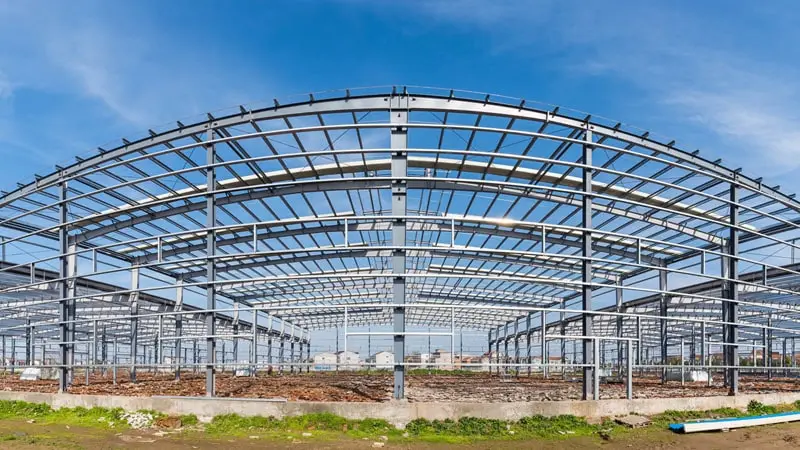
An industrial shed manufacturer designs, fabricates, and typically erects the steel structure that forms a factory, workshop, storage, or processing facility. Unlike a general contractor who might subcontract steel work to a third party, a dedicated manufacturer usually controls the process end-to-end:
- Structural engineering – calculating loads, spans, and foundation requirements specific to the site
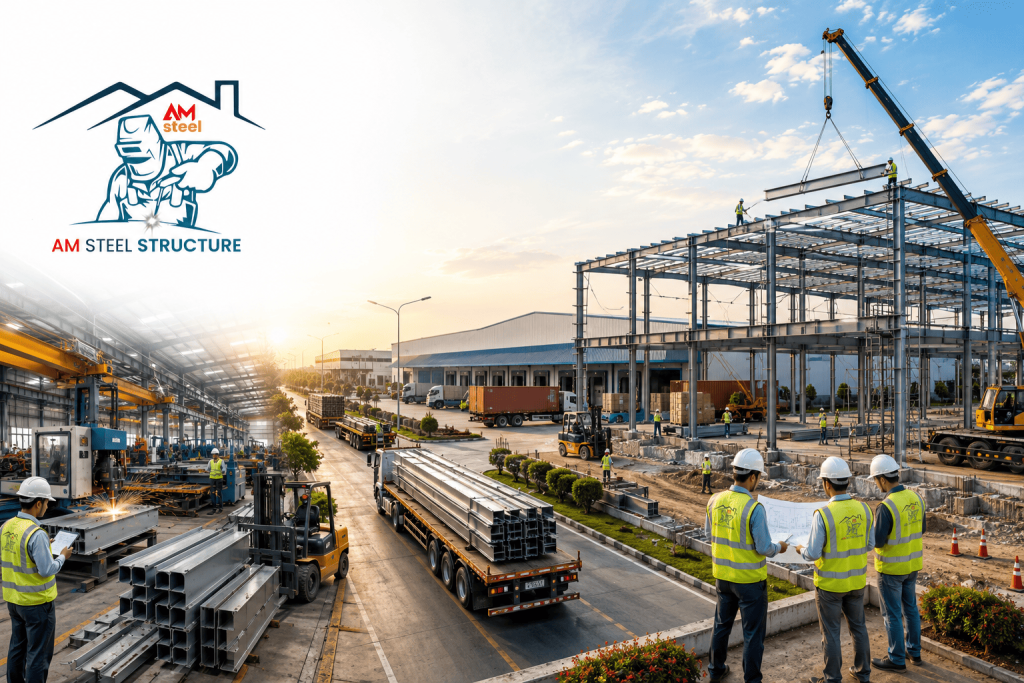
- Steel fabrication – manufacturing columns, rafters, purlins, and cladding to precise tolerances, usually at a dedicated factory
- Site erection – assembling the fabricated components into the finished structure
- Quality control – ensuring welds, coatings, and connections meet structural and durability standards
The distinction matters because when design, fabrication, and erection are handled by the same team, there’s a single point of accountability. When these stages are split across multiple vendors, gaps in communication often show up later as structural inconsistencies, delays, or disputes over responsibility. (Industrial Shed Manufacturer in Bangladesh)
What Is an Industrial Shed Used For?
Industrial sheds serve a wide range of purposes across Bangladesh’s manufacturing and processing sectors:
- Production and manufacturing floors – textile, garment, plastics, and light engineering facilities
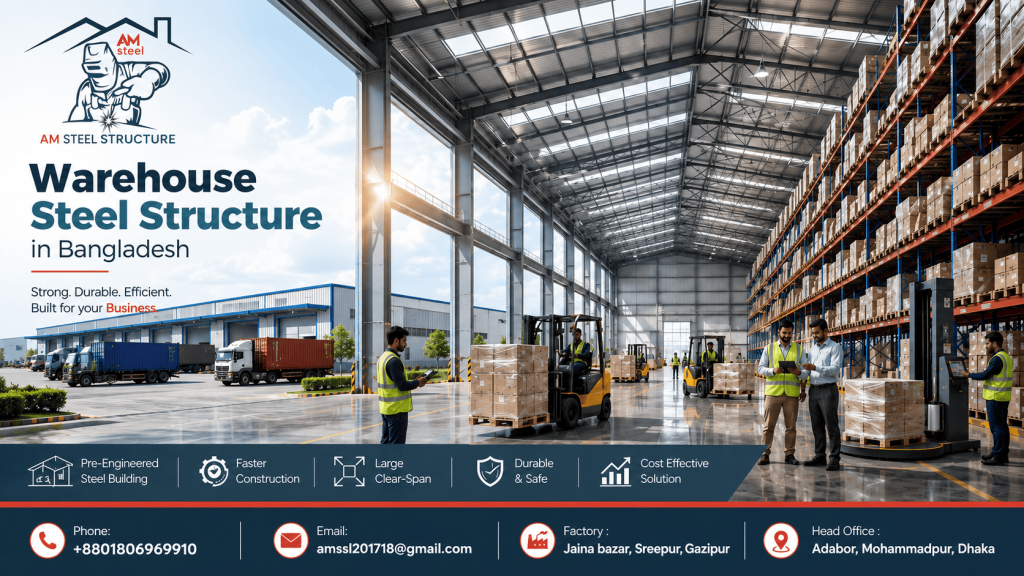
- Raw material and finished goods storage – attached or standalone to a production facility
- Vehicle and equipment workshops – maintenance bays for heavy machinery or transport fleets
- Processing facilities – food processing, agro-processing, and packaging operations
- Assembly and fabrication units – light manufacturing and component assembly
Because “industrial shed” covers such a broad range of uses, the design requirements — span, height, floor loading, ventilation — vary significantly from project to project, which is exactly why manufacturer experience across different shed types matters.
For factory-specific storage and production space, see our factory shed construction guide, which covers design and cost details in more depth.
Key Qualities to Look for in an Industrial Shed Manufacturer
1. In-house structural engineering. A manufacturer with its own engineering team can design a shed specific to your site’s soil conditions and load requirements, rather than adapting a generic template that may be over- or under-engineered for your needs.
2. Fabrication quality control. Ask how components are manufactured — precision-cut and pre-drilled steel sections fabricated in a controlled factory environment result in tighter tolerances and fewer on-site fitting issues than components cut and adjusted on-site.
3. Track record with similar projects. A manufacturer that has built industrial sheds for your specific use case — whether that’s a garment factory or a cold storage facility — will anticipate design considerations that a generalist might miss.
4. Transparent process and timeline. Reliable manufacturers can walk you through each project phase with realistic timelines, rather than offering vague delivery estimates.
5. Material and coating standards. Given Bangladesh’s humidity and monsoon exposure, ask specifically about steel grade and anti-corrosion coating specifications — this has a direct impact on how long the structure lasts with minimal maintenance.
6. Project management capability. End-to-end project management, from design through handover, reduces the coordination burden on your team and minimizes the risk of delays caused by miscommunication between separate vendors.
7. After-handover support. A manufacturer that offers guidance on maintenance and structural inspections after handover indicates a longer-term relationship rather than a one-off transaction.
Industrial Shed Manufacturing Process
Understanding the manufacturing process helps you ask better questions when evaluating a provider. Here’s how it typically works:
- Requirement gathering – Discussing the shed’s intended use, required floor area, height, and any special load or equipment requirements.
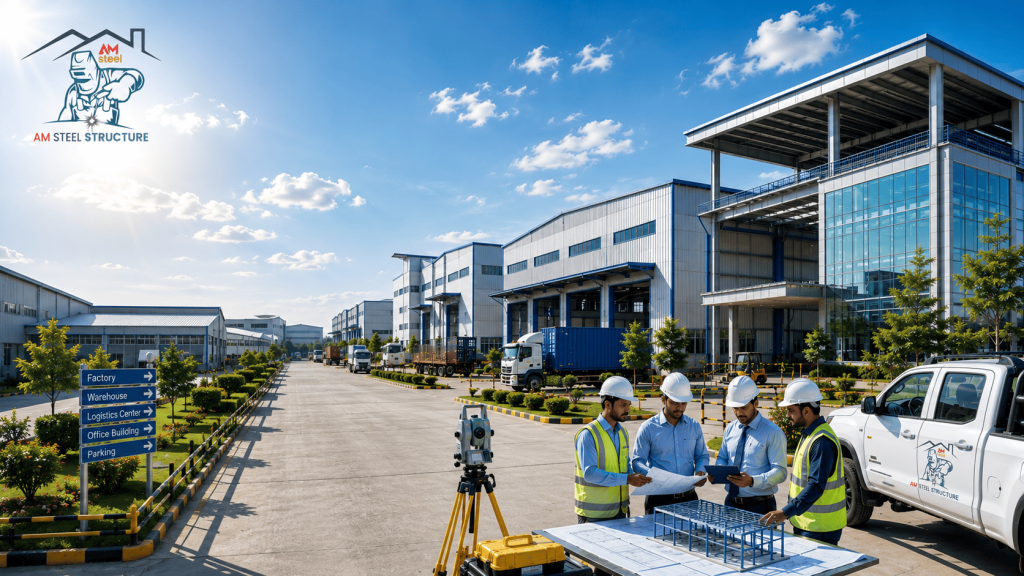
- Site survey and soil testing – Assessing the site to determine appropriate foundation design.
- Structural design – Engineering the frame, including column spacing, roof pitch, and bracing, based on local wind and load standards.
- Material specification – Selecting steel grade, cladding type, and insulation based on the shed’s function and budget.
- Fabrication – Manufacturing the primary and secondary steel components at the factory, cut and drilled to exact design measurements.
- Foundation work – Casting RCC footings and anchor bolts on-site, often running in parallel with fabrication to save time.
- Erection – Assembling the steel frame on-site using bolted and welded connections.
- Cladding and finishing – Installing roofing sheets, wall cladding, doors, and ventilation systems.
- Inspection and handover – Final quality checks before the shed is ready for operational use.
Because fabrication happens off-site while foundation work proceeds in parallel, a well-run manufacturer can typically deliver an industrial shed significantly faster than conventional brick-and-RCC construction.
Design Considerations Specific to Industrial Sheds
Floor loading. Sheds housing heavy machinery need reinforced flooring designed for concentrated point loads, not just general foot traffic.
Crane provisions. If the shed will house an overhead crane system, this needs to be factored into the structural design from the outset — retrofitting crane support later is far more expensive.
Ventilation and natural lighting. Manufacturing environments often generate heat; ridge ventilators, turbo vents, and skylights reduce reliance on mechanical cooling.
Bay spacing and clear height. Wider bay spacing gives more flexibility for machinery layout and future reconfiguration of the production floor.
Fire safety. Depending on the materials processed or stored, fire-rated cladding and clear emergency egress routes need to be part of the design.
Utility integration. Provisions for electrical, water, and compressed air lines should be planned into the structure early rather than added after erection.
Cost Factors for Industrial Sheds
Industrial shed pricing in Bangladesh depends on several variables, and manufacturers should be able to walk you through each one rather than quoting a flat rate:
- Built-up area and clear height
- Bay spacing and span width
- Foundation type, based on soil bearing capacity
- Flooring specification, especially for heavy machinery loads
- Cladding and insulation choice
- Crane or mezzanine provisions, if required
- Site accessibility, which affects transport and erection logistics
Because these factors shift significantly between a light assembly shed and a heavy manufacturing facility, the most reliable way to get an accurate quote is a direct site consultation.
Why Choose AM Steel Structure Bangladesh as Your Industrial Shed Manufacturer
AM Steel Structure Bangladesh has delivered 200+ projects over 7+ years across industrial, commercial, agricultural, institutional, transportation, and recreational sectors — including a wide range of industrial shed builds for manufacturing, processing, and storage use cases.
What this means in practice for shed buyers:
- Single-vendor accountability – our team manages design, fabrication, and erection in-house, so there’s no gap between the engineers who designed your shed and the crew who builds it.
- Site-specific engineering – every shed is structurally designed for its actual location, not adapted from a generic template, which matters given how much soil conditions and wind exposure vary across Bangladesh.
- Quality-controlled fabrication – components are manufactured to precise tolerances, reducing on-site fitting issues and delays.
- Realistic project timelines – we walk clients through a clear, phase-by-phase schedule from the first consultation.
- Support beyond handover – our team provides maintenance guidance to help clients get the maximum lifespan out of their structure.
For a broader look at larger-scale industrial facilities beyond single sheds, see our industrial steel structure company guide.
FAQs
1. What is the difference between an industrial shed manufacturer and a general contractor? An industrial shed manufacturer typically controls design, fabrication, and erection in-house, while a general contractor may subcontract the steel work to separate vendors, which can create coordination gaps.
2. How long does it take to build an industrial shed in Bangladesh? Most industrial sheds are completed within a few months, depending on size and complexity — significantly faster than conventional RCC construction, since fabrication and foundation work happen in parallel.
3. Can an industrial shed be designed to support an overhead crane? Yes, but this needs to be planned into the structural design from the beginning. Retrofitting crane support after construction is far more costly than including it in the original design.
4. What should I ask a manufacturer before signing a contract? Ask about their in-house engineering capability, fabrication process, steel grade and coating specifications, project timeline, and whether they provide post-handover maintenance support.
5. How much does an industrial shed cost in Bangladesh? Cost depends on built-up area, span, foundation requirements, flooring specification, and additional features like cranes or mezzanines. An accurate estimate requires a site-specific consultation.
6. Does AM Steel Structure Bangladesh handle both design and construction? Yes. AM Steel Structure Bangladesh manages the full process in-house, from structural design and engineering through fabrication, erection, and final handover.
Conclusion
Choosing an industrial shed manufacturer in Bangladesh is a decision that affects your operations for years, not just months. The right manufacturer brings in-house engineering, quality-controlled fabrication, and end-to-end project management — reducing both the risk and the coordination burden compared to working with multiple disconnected vendors.
If you’re evaluating manufacturers for an upcoming industrial shed project, use the criteria in this guide as a checklist, and don’t hesitate to ask direct questions about process, materials, and timeline before committing.
Ready to Discuss Your Industrial Shed Project?
AM Steel Structure Bangladesh has delivered 200+ steel building projects nationwide, including industrial sheds for manufacturing, processing, and storage use cases. Contact our team today for a free consultation and site assessment.