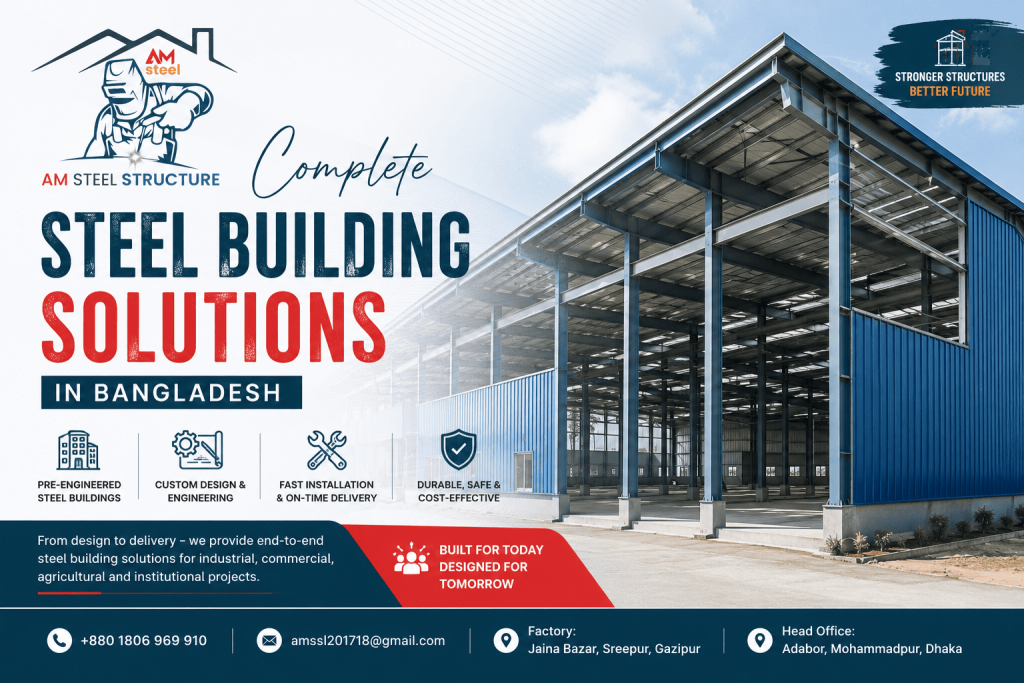
Introduction
Across Bangladesh, businesses are rethinking how they build. Rising land costs, tighter project timelines, and the need for structures that can adapt as operations grow have pushed industrial buyers, developers, and institutions toward a single answer: Steel Building Solution in Bangladesh.
Whether it’s a factory in Narayanganj, a retail showroom in Dhaka, a poultry farm in Mymensingh, or a transport depot near Chattogram port, steel construction now covers nearly every building category once dominated by brick and RCC. But “steel building solution” isn’t a single product — it’s a category that spans design, materials, engineering, and project delivery, tailored to what a business actually needs. (Steel Building Solution in Bangladesh)
This guide breaks down what a complete steel building solution looks like in the Bangladesh market: the types available, how they’re engineered, what drives cost, and how to choose a provider that can deliver on time and to spec. (Steel Building Solution in Bangladesh)
This article builds on two of our earlier guides — choosing a steel structure company in Bangladesh and our warehouse steel structure guide — and looks at the full range of steel building applications beyond warehousing alone. (Steel Building Solution in Bangladesh)
What Does “Steel Building Solution” Actually Mean?
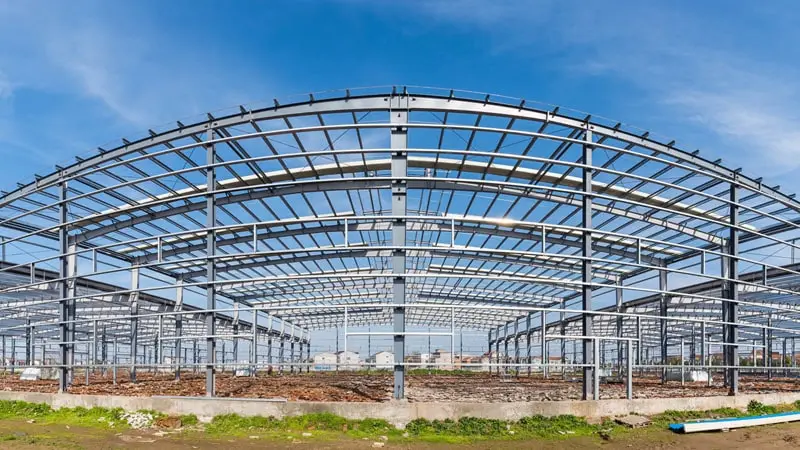
A steel building solution refers to the complete package involved in delivering a steel-framed structure — not just the raw steel itself. This typically includes:
- Structural design and engineering tailored to the building’s use, site, and local load requirements
- Pre-engineered building (PEB) fabrication, where steel components are manufactured off-site to precise specifications
- On-site erection and installation of the primary and secondary structural frame
- Roofing, cladding, and insulation systems suited to the climate and building function
- Ancillary systems such as mezzanines, ventilation, natural lighting, and fire protection
In short, a steel building solution is an end-to-end service — from the first design conversation to a finished, ready-to-use structure — rather than just a supply of steel beams.
Why Steel Is Replacing Traditional Construction in Bangladesh
Bangladesh’s construction sector has historically leaned on brick and RCC, but several practical pressures are driving the shift toward steel:
Land and time efficiency. With commercial land prices rising in and around Dhaka, Chattogram, and Gazipur, businesses can’t afford long construction timelines that delay revenue-generating operations. Steel buildings typically go up in a fraction of the time RCC construction requires.
Predictable performance. Pre-engineered steel components are fabricated to precise tolerances in controlled factory conditions, reducing the on-site variability and rework common with conventional masonry construction.
Adaptability. As business needs change — more storage, a new production line, additional office space — steel buildings are far easier to extend or reconfigure than fixed masonry structures.
Climate resilience. Bangladesh’s monsoon rains and cyclone exposure demand structures engineered for wind and water loads. Properly designed steel buildings, with correct coatings and drainage, handle these conditions reliably over the long term.
Cost control over the building’s life. Beyond the initial build, steel structures generally require less structural maintenance than aging RCC buildings, which helps control total cost of ownership.
Types of Steel Building Solutions
Steel construction now serves a wide range of building categories in Bangladesh. Here are the main ones:
1. Industrial Buildings – Factories, production units, and processing plants that need large clear-span floor areas for machinery and workflow efficiency.
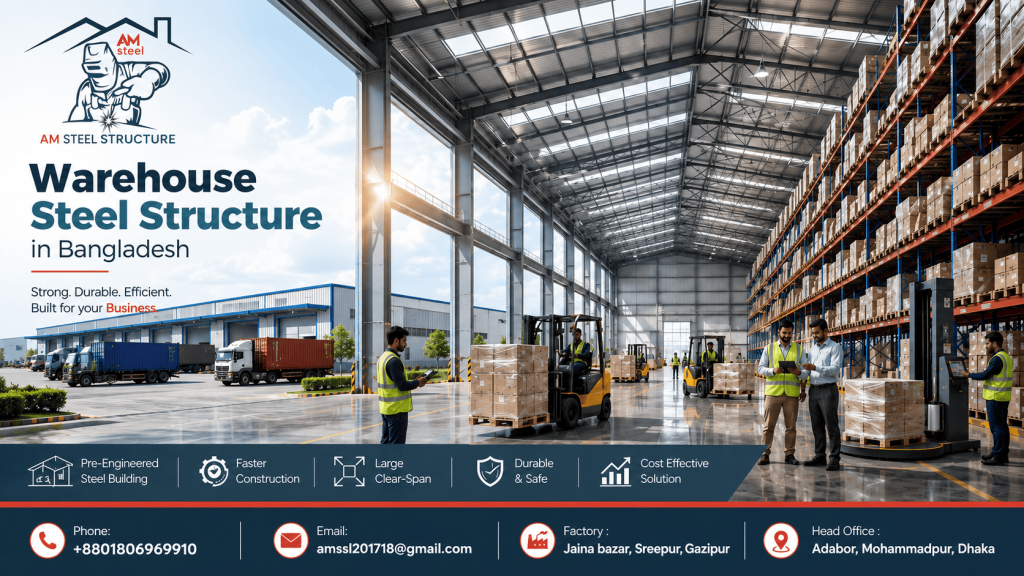
2. Warehouses and Distribution Centers – Storage-focused structures designed for racking systems, loading docks, and high-volume inventory movement.
3. Commercial and Retail Structures – Showrooms, shopping structures, and office buildings that combine steel framing with modern architectural finishes.
4. Agricultural Buildings – Poultry sheds, cold storage, grain storage, and agro-processing facilities that require specific ventilation and hygiene considerations.
5. Institutional Buildings – Schools, training centers, and community facilities that benefit from fast, cost-effective construction.
6. Transportation and Logistics Structures – Depots, workshops, and vehicle maintenance facilities requiring wide, column-free bays.
7. Recreational and Sports Structures – Indoor sports halls, gymnasiums, and event spaces that need large open spans without interior obstructions.
Each of these building types shares the same underlying steel framing principles but is engineered differently based on load requirements, span, and intended use.
Key Components of a Complete Steel Building Solution
Structural framing – Columns, rafters, and trusses form the load-bearing skeleton of the building, engineered specifically for the site’s soil and wind conditions.
Secondary steel – Purlins and girts support the roof and wall cladding, transferring loads back to the primary frame.
Roofing and wall cladding – Color-coated steel sheets, with options for insulated sandwich panels where temperature control matters.
Foundation system – RCC footings and base plates sized to the building’s structural loads and local soil bearing capacity.
Doors, windows, and ventilation – Selected based on the building’s function, from large sliding doors for industrial access to natural ventilation systems for agricultural buildings.
Fire and safety provisions – Fire-rated cladding, emergency exits, and, where required, sprinkler system provisions integrated into the design.
The Design and Engineering Process
A well-executed steel building solution starts long before fabrication. The typical process includes:
- Needs assessment – Understanding the building’s purpose, required floor area, height, and future expansion plans.
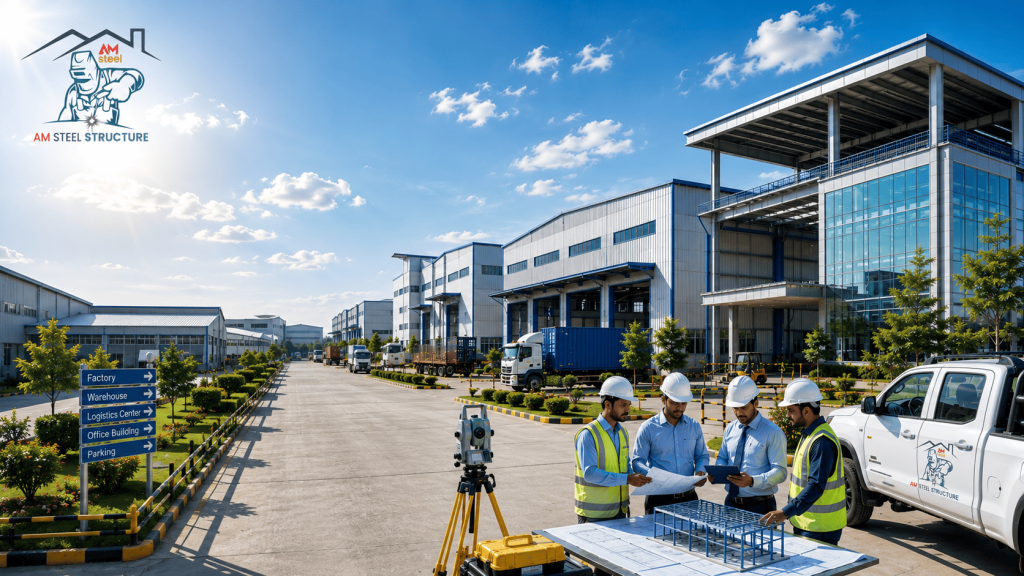
- Site evaluation – Soil testing and site survey to determine foundation requirements.
- Structural design – Engineering the frame to meet local wind, seismic, and load standards specific to the site’s location in Bangladesh.
- Material and specification selection – Choosing steel grades, cladding types, and insulation based on the building’s function and budget.
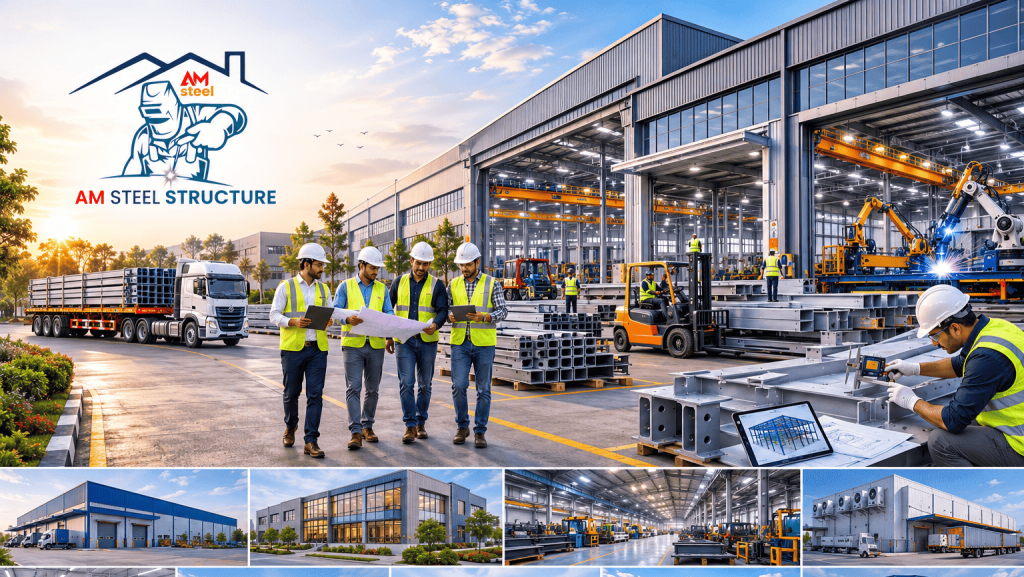
- Fabrication – Manufacturing steel components off-site to exact design tolerances.
- Site preparation and foundation work – Casting footings and anchor points while fabrication happens in parallel.
- Erection – Assembling the primary and secondary steel structure on-site.
- Cladding and finishing – Installing roofing, walls, doors, and any interior systems.
- Quality inspection and handover – Final checks before the building is ready for use.
Running design, fabrication, and site preparation in parallel is one of the biggest reasons steel building solutions are delivered faster than traditional construction methods.
Benefits of Choosing a Complete Steel Building Solution
- Significantly shorter construction timelines
- Lower long-term maintenance costs compared to RCC
- Design flexibility to match exact operational needs
- Large clear-span capability for open floor plans
- Strong resistance to Bangladesh’s climate conditions when properly coated
- Easier and more cost-effective future expansion
- Reduced construction waste and higher recyclability of materials
- Single-point accountability when working with an end-to-end provider
Cost Factors to Consider
Steel building costs in Bangladesh vary based on multiple factors, and no two projects are priced identically. The main cost drivers include:
- Total built-up area and building height
- Span width and bay spacing
- Foundation requirements based on soil conditions
- Cladding and insulation specifications
- Flooring type, especially for heavy machinery or racking loads
- Additional features such as mezzanines, cranes, or specialized ventilation
- Site location and accessibility, which affects transport and erection logistics
Because these variables shift significantly between an agricultural shed and a multi-story commercial structure, an accurate quote requires a project-specific consultation rather than a generic price-per-square-foot estimate.
How to Choose the Right Steel Building Solution Provider
Not all steel construction providers offer the same level of service. When evaluating a provider in Bangladesh, look for:
- In-house structural engineering, rather than outsourced or templated designs
- A proven project portfolio across the specific building type you need
- Transparent process and timelines, from design through handover
- Quality-assured materials, including coated steel suited to local climate conditions
- End-to-end project management, so you’re not coordinating separate design, fabrication, and erection vendors
- Post-construction support, including maintenance guidance and structural inspections
Why Choose AM Steel Structure Bangladesh
AM Steel Structure Bangladesh delivers complete steel building solutions across industrial, commercial, agricultural, institutional, transportation, and recreational sectors. With over 7 years of experience and 200+ completed projects, our team manages every stage of the process in-house — from structural design and engineering through fabrication, erection, and final handover.
We work closely with clients to understand not just the building they need today, but how their operations might grow over the next five to ten years, designing structures that can adapt rather than needing to be rebuilt. Every project is engineered specifically for its site conditions, not adapted from a generic template — which is part of why our structures continue to perform reliably through Bangladesh’s monsoon seasons and variable soil conditions.
FAQs
1. What is included in a complete steel building solution? A complete solution typically includes structural design, engineering, steel fabrication, foundation work, on-site erection, roofing and cladding installation, and final handover — delivered as a single, managed project.
2. How is a steel building solution different from just buying steel materials? Buying steel materials alone gives you raw components. A steel building solution includes the engineering, fabrication, and construction management needed to turn those materials into a finished, functional structure.
3. Which industries in Bangladesh use steel building solutions? Industrial manufacturing, warehousing and logistics, retail and commercial, agriculture, education, transportation, and recreational sectors all use steel building solutions for different structural needs.
4. How long does it take to complete a steel building project? Timelines vary by size and complexity, but most steel building projects are completed significantly faster than comparable RCC construction, often within a few months rather than a year or more.
5. Can steel buildings be customized for specific business needs? Yes. Steel building solutions are highly customizable in terms of span, height, cladding, insulation, and interior layout, allowing the structure to be designed around the specific operational requirements of the business.
6. How do I get an accurate cost estimate for my project? Since cost depends on site conditions, building specifications, and intended use, the most accurate estimate comes from a direct consultation and site assessment with a qualified steel building provider like AM Steel Structure Bangladesh.
Conclusion
Steel building solutions have moved from being an alternative construction method to becoming the standard choice for businesses across Bangladesh that need speed, durability, and flexibility. Whether the requirement is a factory floor, a retail structure, an agricultural facility, or a logistics hub, the right steel building solution is engineered specifically around how the space will be used — not forced into a generic template.
Choosing a provider that manages the full process, from design through handover, removes much of the coordination burden and risk that comes with multi-vendor construction projects.
Ready to Explore a Steel Building Solution for Your Business?
AM Steel Structure Bangladesh has delivered 200+ steel building projects across the country. If you’re planning a new facility, get in touch with our team for a free consultation and site assessment to discuss the right solution for your needs.