Introduction
Choosing the right industrial steel structure company in Bangladesh shapes how efficiently your factory or production facility operates for decades. Unlike general commercial buildings, industrial structures carry unique demands, since they must handle heavy machinery, crane systems, and continuous production loads. So, the company you choose needs specific expertise in these challenges, not just general construction experience.
This guide explains exactly what industrial steel structures require, how to evaluate a company’s capability for this specific sector, and what AM Steel Structure Bangladesh brings to industrial projects nationwide.
For a broader look at steel companies generally, see our guides on steel company in Bangladesh and best steel company in Bangladesh. This article focuses specifically on industrial-sector requirements.
What Makes Industrial Steel Structures Different?
Industrial buildings serve a distinct purpose compared to warehouses, offices, or retail spaces. Specifically, they house manufacturing equipment, production lines, and often heavy machinery that places unique demands on the structural frame.
For instance, an industrial steel structure company must account for vibration loads from machinery, potential crane systems, and floor loading far beyond what a typical commercial building requires. Additionally, ventilation, natural lighting, and utility integration all become more complex when production processes generate heat, dust, or fumes.
Because of these factors, choosing an industrial steel structure company in Bangladesh with genuine industrial experience matters far more than choosing one with only general construction background.
For smaller-scale or single-unit industrial buildings, see our industrial shed manufacturer guide, which covers manufacturer selection in more detail.
What Does an Industrial Steel Structure Company in Bangladesh Do?
A capable industrial steel structure company typically manages the full project lifecycle, including:
- Structural engineering – calculating loads specific to machinery, cranes, and production requirements
- Detailed drafting – producing fabrication-ready drawings for every component
- Factory fabrication – manufacturing columns, rafters, and cladding to precise tolerances
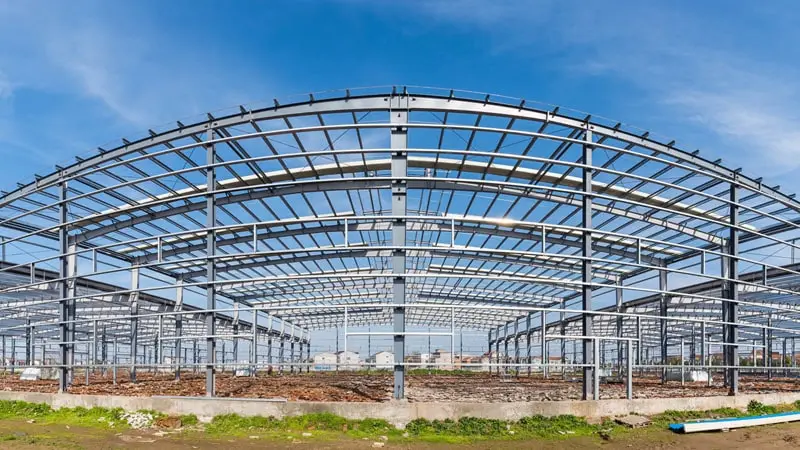
- Site erection – assembling the structure following the engineered sequence
- Utility coordination – planning provisions for electrical, water, and compressed air systems
- Quality control – inspecting welds, coatings, and dimensional accuracy throughout
Some companies handle only fabrication or erection, subcontracting the rest. However, this approach introduces coordination risk, since industrial projects often require close collaboration between structural design and equipment planning.
Key Design Considerations for Industrial Steel Structures
Floor loading. Industrial facilities housing heavy machinery need reinforced flooring designed for concentrated point loads, not just standard foot traffic.
Crane provisions. If the facility requires an overhead crane system, engineers must factor this into the structural design from the outset. Retrofitting crane support later costs significantly more than including it in the original design.
Bay spacing and clear height. Wider bay spacing gives more flexibility for machinery layout and future production line reconfiguration.
Ventilation and natural lighting. Manufacturing environments often generate heat, so ridge ventilators, turbo vents, and skylights reduce reliance on mechanical cooling.
Fire safety. Depending on the materials processed, fire-rated cladding and clear emergency egress routes need careful integration into the design.
Utility integration. Provisions for electrical, water, and compressed air lines should be planned early, rather than added after erection is complete.
Why Sector-Specific Experience Matters
An industrial steel structure company that has built dozens of factories brings knowledge that generalist contractors simply don’t have. For example, they understand how machinery vibration affects structural connections over time. They also know how to size foundations for concentrated equipment loads, and how to plan utility routing before construction begins.
By contrast, a company without this specific experience may default to standard commercial design assumptions, which can lead to costly modifications once machinery installation begins. Therefore, reviewing an industrial steel structure company’s portfolio specifically for industrial projects matters more than reviewing their overall project count alone.
How to Evaluate an Industrial Steel Structure Company in Bangladesh
Ask about their industrial project portfolio specifically. A company with strong warehouse experience isn’t automatically equipped for factory-floor engineering challenges.
Confirm in-house structural engineering. Industrial projects benefit enormously from engineers who understand machinery loads, not just standard building codes.
Ask about crane and heavy-load design experience. If your facility needs crane systems or reinforced flooring, confirm the company has handled similar requirements before.
Review their fabrication quality control process. Precision matters even more for industrial structures, since misaligned connections can affect equipment installation later.
Ask about utility coordination. A company experienced with industrial clients should proactively ask about your electrical, water, and ventilation requirements during design.
Check for post-handover support. Industrial facilities often need ongoing structural inspections, especially as equipment loads or production processes change over time.
The Industrial Construction Process
- Consultation and requirement gathering – First, we discuss your production needs, equipment requirements, and site conditions.
- Site survey and soil investigation – Next, we assess ground conditions to determine appropriate foundation design.
- Structural design – Then, engineers calculate loads, including machinery vibration and potential crane systems.
- Material specification – Meanwhile, we select steel grade and cladding based on the facility’s specific function.
- Fabrication – The factory manufactures primary and secondary steel components to exact measurements.
- Foundation work – Simultaneously, crews cast footings sized for both structural and equipment loads.
- Erection – After that, crews assemble the steel frame using bolted and welded connections.
- Cladding and utility integration – Next, we install roofing, wall cladding, and utility provisions.
- Inspection and handover – Finally, we complete quality checks before the facility becomes operational.
Because fabrication happens off-site while foundation work proceeds in parallel, this process delivers industrial facilities significantly faster than conventional, sequential construction.
Cost Factors for Industrial Steel Structures
Industrial steel structure costs in Bangladesh depend on several variables, and a reliable company should explain each one clearly:
- Built-up area and clear height
- Bay spacing and span width
- Foundation type, based on soil bearing capacity
- Flooring specification, especially for heavy machinery loads
- Cladding and insulation choice
- Crane or mezzanine provisions, if required
- Utility integration complexity
Because these factors shift significantly between projects, an accurate quote from any industrial steel structure company in Bangladesh requires a direct site consultation rather than a flat per-square-foot rate.
Industries That Rely on Industrial Steel Structures
Textile and garment manufacturers need large, open production floors with reliable ventilation and fire safety provisions.
Plastics and light engineering companies often require reinforced flooring and crane systems for handling raw materials and finished products.
Food and beverage processors need hygienic design considerations alongside standard structural requirements.
Automotive and heavy equipment manufacturers typically need the most demanding structural specifications, including substantial crane capacity and reinforced flooring.
Pharmaceutical manufacturers require controlled environments with specific ventilation and cleanliness standards integrated into the structural design.
Overall, matching a provider’s sector-specific experience to your industry matters just as much as their general construction reputation.
For factory-specific construction needs, see our factory shed construction guide, which covers design and cost details for production facilities.
Common Mistakes When Choosing an Industrial Steel Structure Company
Assuming all steel companies handle industrial projects equally. Warehouse and commercial expertise doesn’t automatically translate to factory-floor engineering knowledge.
Skipping equipment planning during design. Machinery layout and utility requirements should shape the structural design, not get added afterward.
Underestimating future production needs. Sizing a facility only for current equipment often leads to costly modifications as operations grow.
Not verifying crane design experience. If your facility needs crane systems, confirm the company has handled similar structural requirements before committing.
Overlooking long-term structural inspection needs. Industrial facilities benefit from periodic checks, especially as equipment loads change over time.
Why AM Steel Structure Is the Right Industrial Steel Structure Company for Your Project
AM Steel Structure Bangladesh has delivered 200+ projects over 7+ years, including a substantial portfolio of industrial buildings for manufacturing, processing, and production facilities nationwide. Specifically, our approach includes:
- In-house structural engineering, experienced with machinery loads, crane systems, and industrial-specific requirements
- Factory-controlled fabrication, ensuring precise tolerances that support smooth equipment installation later
- Proactive utility coordination, planning electrical, water, and ventilation provisions during the design phase
- Reinforced flooring expertise, for facilities housing heavy machinery or production equipment
- Transparent project management, with realistic timelines communicated from the first consultation
- Post-handover support, including structural inspections as your production needs evolve
Comparing “Adequate” vs “Sector-Specialized” Industrial Steel Structure Companies
| Factor | Adequate General Contractor | Specialized Industrial Provider |
|---|---|---|
| Engineering approach | Standard commercial templates | Machinery loads and crane-specific calculations |
| Flooring design | Standard slab specification | Reinforced for concentrated equipment loads |
| Utility planning | Added after construction | Integrated during design phase |
| Portfolio | General commercial buildings | Verifiable factory and production projects |
| Crane experience | Limited or none | Proven overhead crane design capability |
| Post-handover | Minimal follow-up | Ongoing structural inspection support |
So, use this table when comparing quotes from different companies. Since general contractors can sound just as confident as specialized providers, checking their actual portfolio against these criteria reveals the real difference.
Questions to Ask Before Choosing an Industrial Steel Structure Company
Before signing with any company, ask these questions directly:
- “How many industrial or factory projects have you completed?” This reveals whether their experience actually matches your project type.
- “Have you designed structures with overhead crane systems?” If your facility needs one, this experience is essential, not optional.
- “How do you calculate flooring requirements for heavy machinery?” A confident, specific answer signals genuine industrial expertise.
- “Who handles utility coordination during design?” This shows whether electrical and ventilation planning happens early or gets added later.
- “Can I see photos of completed industrial projects?” Verifiable evidence matters more than general marketing claims.
- “What ongoing support do you offer after handover?” Industrial facilities often need periodic structural checks as operations grow.
If a company struggles to answer these questions specifically, that hesitation tells you something important about their actual industrial experience.
Long-Term Value for Industrial Facilities
Industrial steel structures represent a long-term operational asset, not just a one-time construction cost. A properly engineered facility accommodates future equipment upgrades, production line changes, and potential expansion without requiring costly structural modifications.
By contrast, a facility designed without industrial-specific expertise often needs expensive retrofitting once real production demands become clear. For instance, adding crane support after construction, reinforcing flooring for new machinery, or expanding utility capacity all cost significantly more after the fact than if planned upfront.
Therefore, investing in an industrial steel structure company with genuine industrial experience from the start typically saves considerable money over the facility’s operational lifetime.
FAQs
1. What makes an industrial steel structure different from a warehouse? Industrial structures typically house manufacturing equipment, production lines, and sometimes crane systems, requiring specific engineering for machinery loads, vibration, and utility integration that warehouses don’t usually need.
2. Can an industrial steel structure support an overhead crane? Yes, but this needs planning into the structural design from the beginning. Retrofitting crane support after construction costs significantly more than including it upfront.
3. How long does it take to build an industrial steel structure in Bangladesh? Most industrial projects complete significantly faster than conventional RCC construction, since fabrication and foundation work proceed in parallel rather than sequentially.
4. What should I ask an industrial steel structure company before signing? Ask about their industrial project portfolio, crane and heavy-load design experience, in-house engineering capability, and whether they proactively coordinate utility planning during design.
5. How much does an industrial steel structure cost in Bangladesh? Cost depends on built-up area, span, foundation requirements, flooring specification, and features like cranes or mezzanines. An accurate estimate requires a site-specific consultation.
6. Does AM Steel Structure handle crane and heavy machinery requirements? Yes. AM Steel Structure Bangladesh has experience designing structures with reinforced flooring and crane provisions for manufacturing and industrial clients nationwide.
Conclusion: Choosing the Right Industrial Steel Structure Company
Choosing an industrial steel structure company in Bangladesh means evaluating sector-specific expertise, not just general construction experience. Because industrial facilities carry unique demands around machinery loads, crane systems, and utility integration, the right provider needs proven experience handling exactly these challenges.
Whatever your production requirements, working with a company that understands industrial engineering from the ground up will save you significant cost and disruption down the line.
Ready to Build Your Industrial Facility?
AM Steel Structure Bangladesh has delivered 200+ steel building projects nationwide, including a strong portfolio of industrial and manufacturing facilities. Contact our team today for a free consultation and site assessment.